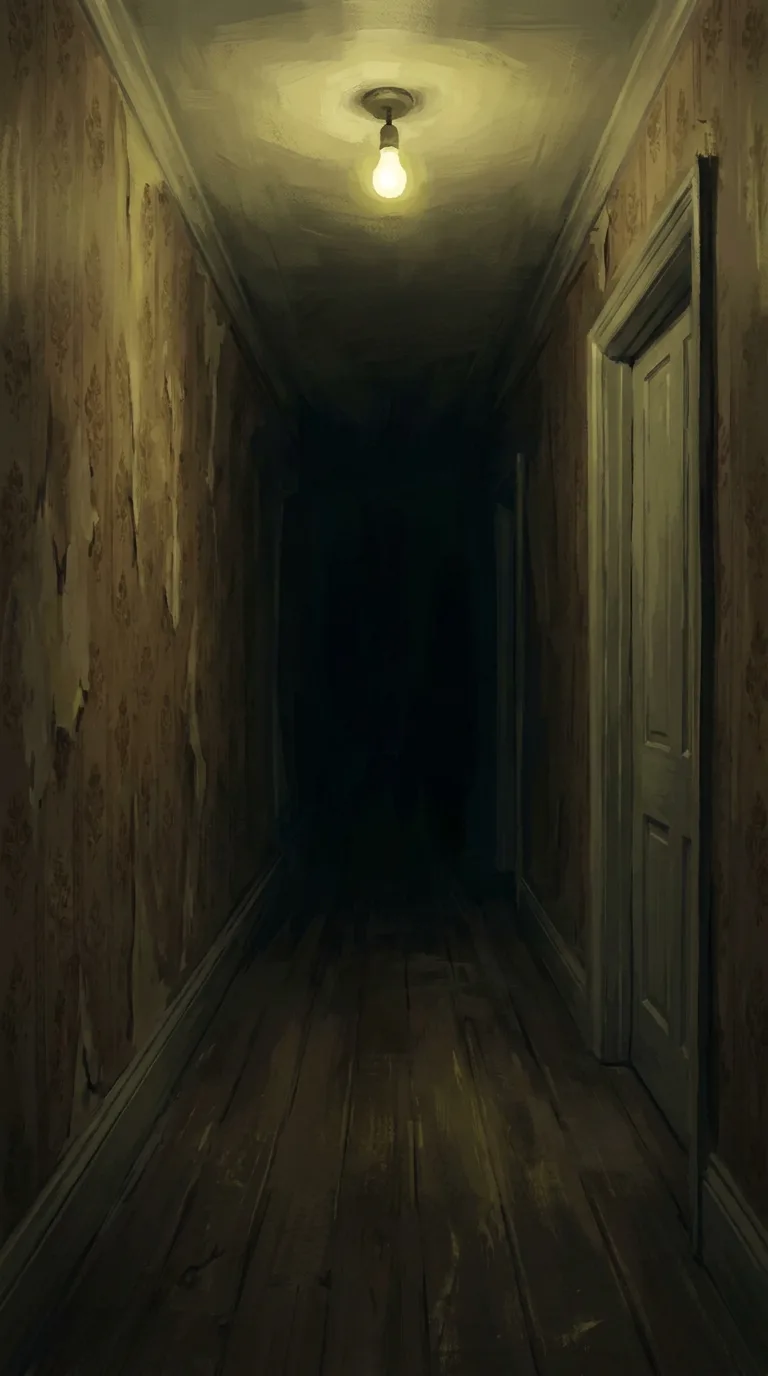
Third Night
The house came with a rule. I broke it on the third night.
The solicitor mentioned it the way you'd mention a temperamental boiler. The upstairs hallway light stays on until dawn. He did not look up from the deed when he said it, and I did not ask him to explain, because I was thirty-four and had just been handed a four-bedroom house in exchange for signing my name, and there is a point past which you stop asking questions in case someone reconsiders.
There were bulbs in the pantry. Three boxes, the old kind, sixty watt. That should have told me something. Nobody buys three boxes of anything for a habit they intend to break.
The first night I left it on because I was too tired to argue with a dead man's instructions. The house was cold in the way empty houses are, and I slept badly, and at some point around four I got up for water and the hallway was exactly as I had left it: yellow, ordinary, the wallpaper going brown at the seams. There was nothing in it. I want to be clear about that. There was nothing in it.
The second night I left it on out of what I would have called superstition if anyone had asked, and habit if I were being honest, and I slept better, and in the morning I opened all the windows and the house smelled less like a closed drawer.
The third night I turned it off.
I would like to say I did it deliberately. That I stood at the switch and weighed it. But I had carried a box of books up from the car and my hands were full and I hit the switch with my elbow the way you do, and I was halfway into the bedroom before I registered the dark behind me, and by then it seemed absurd to go back.
I lay in bed and listened to the house not do anything.
That is the part nobody tells you. It did not creak. It did not settle. A house with the lights off settles constantly — that is what houses are, wood remembering the shape of the day — and this one had gone completely still, the way a room goes still when someone in it has stopped talking because you walked in.
I told myself I was listening too hard. I turned over. I put my arm across my eyes.
And then, very clearly, from the far end of the hallway, I heard someone lower themselves into a sitting position.
Not footsteps. I need to be precise here because the precision is the whole of it. There were no footsteps before and none after. It was the sound of a person who had been standing for a long time deciding to sit down — that shift of weight, the small grunt of fabric, a knee finding the floorboard. Fifteen feet away. Facing, I somehow knew, my door.
I did not move. I want to be able to tell you that I got up, that I confronted it. I lay there with my arm across my eyes and I made my breathing long and even, and I listened to the sound of someone sitting in my hallway in the dark, waiting for me to come out.
At some point I slept. I do not know how. The body gives up eventually; it has no stamina for terror, it can only sprint.
In the morning the hallway was empty and the light switch was where I had left it, off, and there was a shallow oval of dust disturbed on the floorboards at the far end, near the airing cupboard, about the size of where someone would sit.
I turned the light on. I left it on all day.
---
I called the solicitor. He was pleasant and unhelpful in a practised way, and when I described the sound he was quiet for a moment longer than the question warranted.
"The previous owner was very particular about the light," he said.
"Yes. You mentioned."
"For eleven years."
I waited. He did not add anything, and the silence went on until it became clear that he was not being coy — he was waiting to see whether I would ask the next question, and had decided he would answer it if I did, and would be relieved if I did not.
I did not ask it. I have thought about that a great deal since.
---
I bought a lamp. A cheap one, a floor lamp with a plastic shade, and I put it at the end of the hallway on the landing so that even if the ceiling bulb went the lamp would carry it. I put a nightlight in the socket by the airing cupboard. I put a torch on the bedside table and a second one under the bed, and I want to say all this sounded reasonable at the time and I understand now how it reads.
For six weeks I did not turn the hallway light off, and nothing happened, and I began to describe the third night to myself as a thing I had dreamed. That is what the mind does with information it cannot use. It files it somewhere soft.
Then in October the power went out.
The whole street. A transformer, they said afterwards. It went at eleven twenty at night and I was in the bathroom with a toothbrush in my mouth, and the dark came down so completely that I put my hand on the sink to be sure the sink was still there.
I stood very still.
The house was silent in that particular way again, the interrupted way, and I stood in the bathroom with my toothbrush and thought: it does not know I am awake.
I do not know where that thought came from. But I understood, standing there, that it was the correct thought, and that everything now depended on it remaining true.
I did not spit. I did not run the tap. I lowered the toothbrush to the edge of the sink with both hands and set it down without a sound, and I stood in the dark of my own bathroom for a length of time I could not begin to estimate, and I listened.
Down the hall, someone lowered themselves into a sitting position.
Fifteen feet. Facing my bedroom door — where I would be, where I ought to have been, where any reasonable person is at twenty past eleven in October. I was not in my bedroom. I was in the bathroom, eight feet the other way, behind a door I had left open.
It had gone to the wrong place.
And that is when I understood the rule properly — not as superstition, not as a dead man's tic. Eleven years he had kept that light on, and I had assumed it was to keep something out.
It was so it would know where to sit.
I stood in the bathroom until the power came back at six minutes past two, and the hall light came on by itself because I had never turned it off at the switch, and I heard, from the far end of the hallway, the sound of a person getting up.
---
I still live here. People find that strange, when I tell them, which I have learned not to do.
But I have thought about it for a long time now, and the arithmetic is not complicated. Eleven years he kept it lit. Eleven years it sat at the end of the hall in the light, where he could see it if he chose to look, and he never chose, and it never came closer.
It is a very old arrangement, I think. Older than the house. You leave a light and a place to sit, and the thing that comes takes the place you have given it rather than the place it would choose.
The bulbs are the sixty-watt kind. I buy them three boxes at a time.
I have never looked down the hallway at night. Not once. That is not the rule — the rule is only the light — but I have come to believe there is a second rule underneath it that nobody wrote down, and that the reason nobody wrote it down is that the people who broke it were not able to.
Last week my sister came to stay. She is practical, and she noticed the lamp and the nightlight and the ceiling bulb all burning at two in the morning, and she turned them off on her way to bed, because she is thoughtful and because electricity is not free.
I was asleep. I did not hear her do it.
I heard what came after — the long, considering pause of something finding the hallway dark for the first time in eleven years, and then the sound of it standing up, and then, for the first time since I have lived in this house, the sound of it walking.
It did not come to my door.
She has been asleep in the back bedroom for two days now, and she looks well, and she is breathing, and when I sit on the edge of the bed and say her name she smiles without opening her eyes, the way you smile at someone talking in the next room.
I have left every light in the house burning.
I am going to sit here until she wakes up.
 Read next
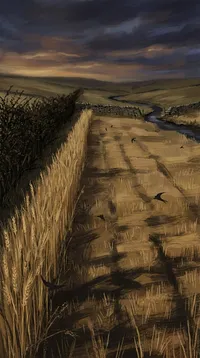
The Long Field
An incomer to a Yorkshire farm cuts the last strip of barley that the whole village refuses to touch, and learns too late what the custom was actually for.
Read next
The Long Field
An incomer to a Yorkshire farm cuts the last strip of barley that the whole village refuses to touch, and learns too late what the custom was actually for.
Get the next one first
A new horror story every week, free, straight to your inbox. Subscribers read each one before it appears anywhere else.